

What Casa Dorada Is
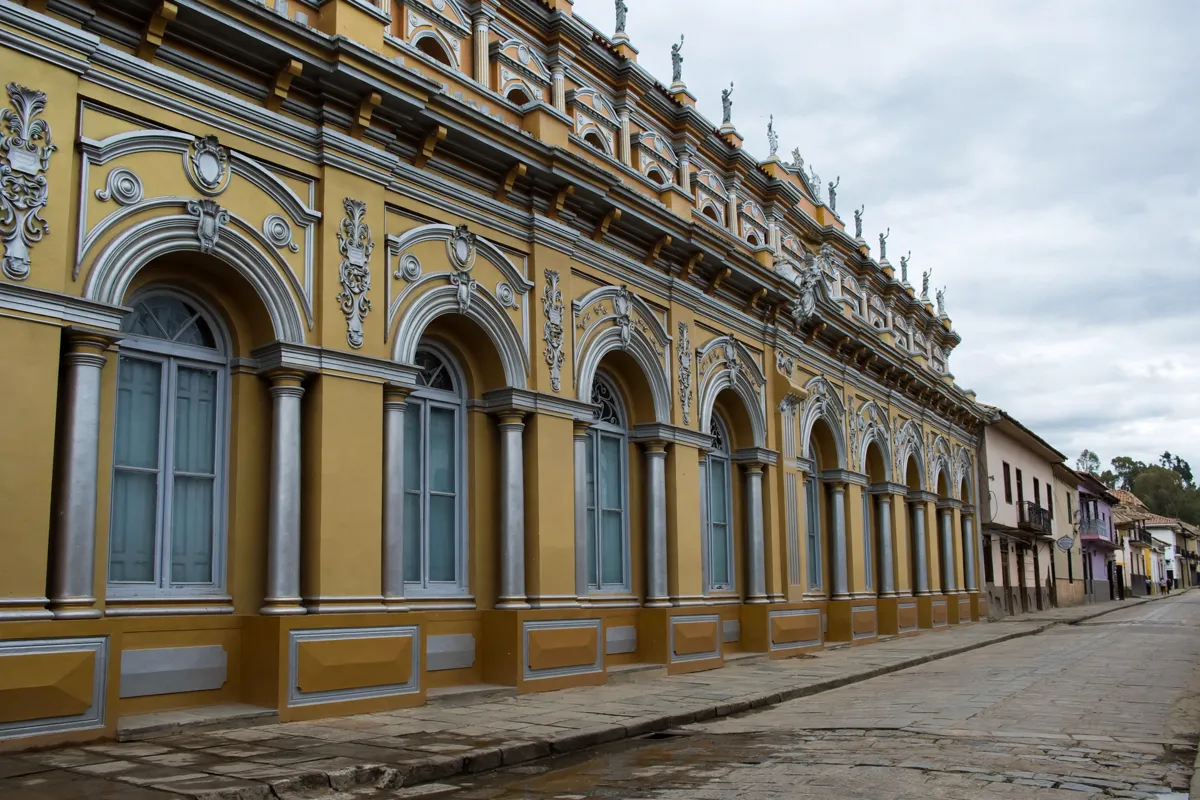
Casa Dorada, also called Casa de la Cultura, is a two-story building in Tarija designed and constructed by Miguel and Antonio Camponovo. The municipal tourism office describes it as an example of Art Nouveau.
Construction began in 1886 or 1887, according to municipal accounts, and was completed in 1903. Its owners were Moisés Navajas Ichazo and Esperanza Morales Serrano.
The ground floor originally served as a commercial center, while the upper floor was their residence. Casa Dorada is now property of the Casa de la Cultura and has been declared a National Historic Monument under Law 1321.
The building’s role has changed over time. Today, its ground floor houses cultural spaces including an auditorium, library-hemeroteca, art gallery, Teatro de la Cultura foyer and Casa de la Cultura administrative offices.
The upper floor preserves items from the former residence, including an oratory with 28 painted scenes on its ceiling depicting the life, passion and death of Jesus Christ.
Where to Find Casa Dorada
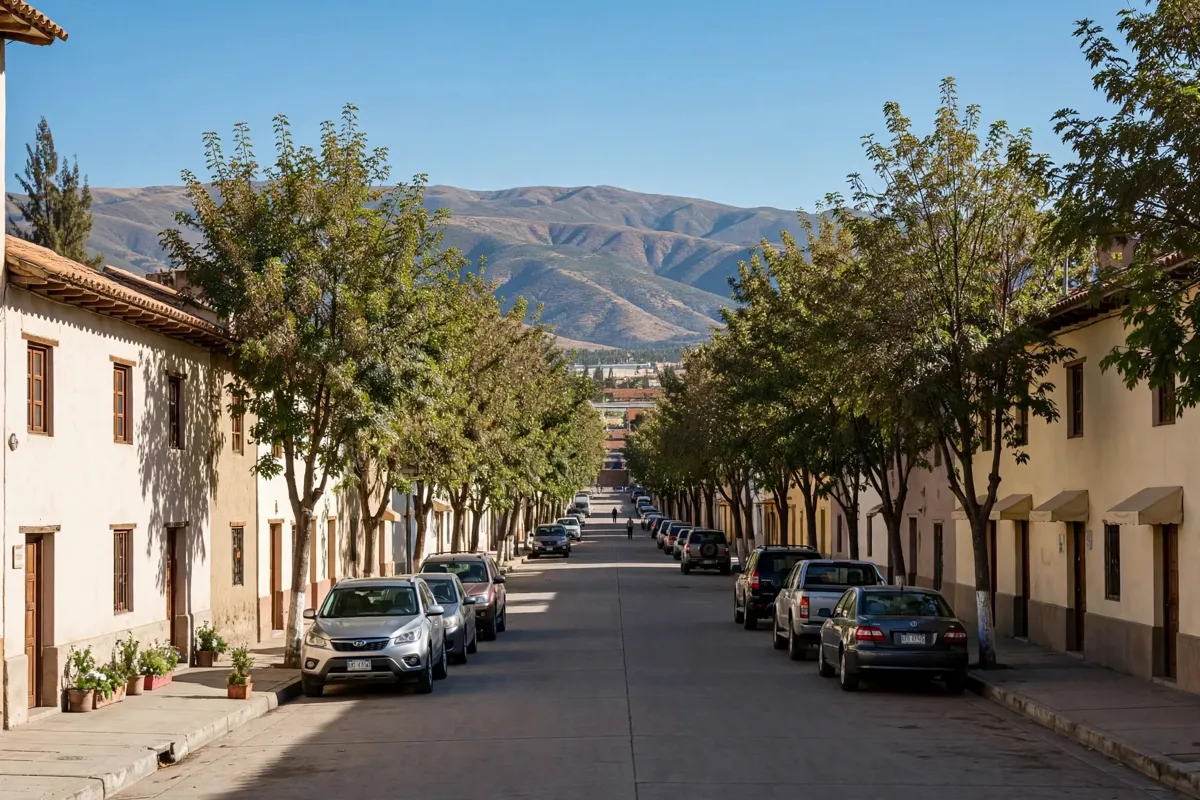
Casa Dorada stands on the corner of Calle Ingavi and General Bernardo Trigo Espejo. From Terravina Hotel del Vino, it’s about an eight-minute walk, making it a straightforward cultural stop while you’re in Tarija.
The municipal tourism listing gives the street-corner address but does not provide a walking route or local transport directions. If you’re planning a broader museum visit, you can also consult this guide to museums near central Tarija.
What to Look for on the Building
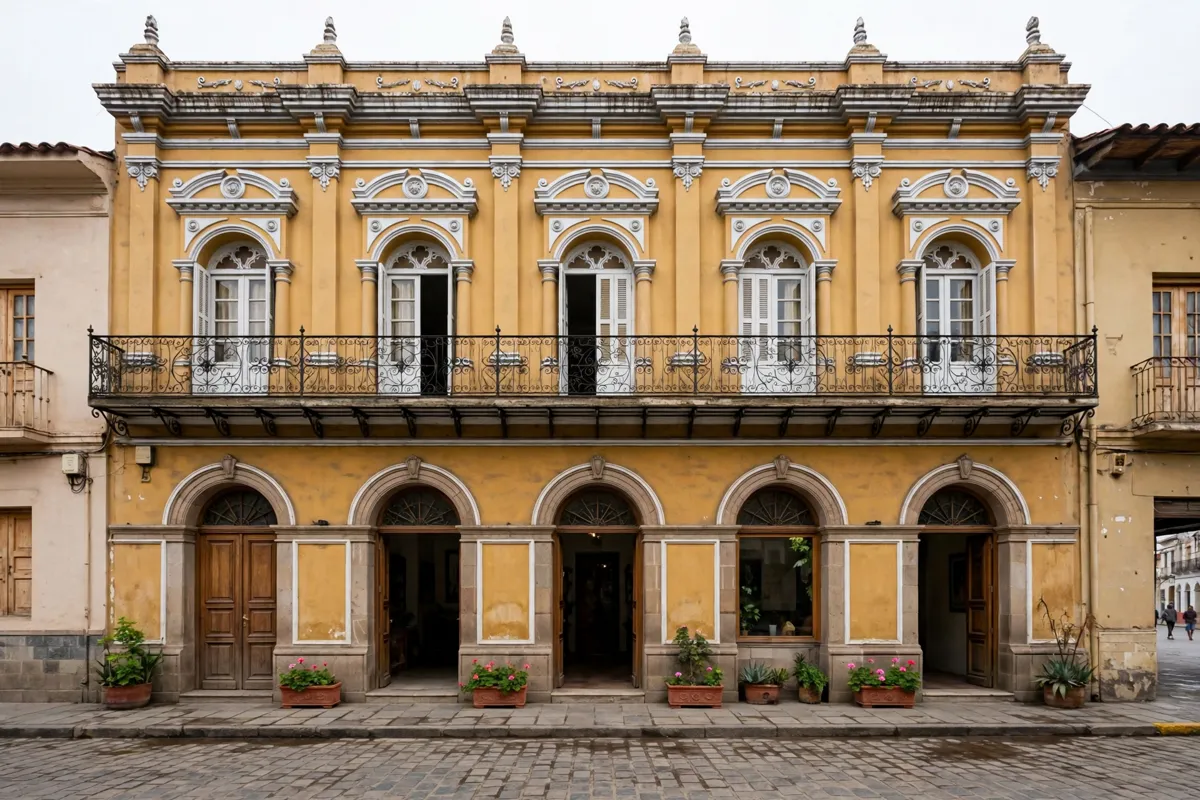
Take time to look closely at the façade. Its features include decorated and embossed doors, a continuous upper-level balcony with iron railings, pointed-arch openings, columns, a pediment, caryatids and cornices.
Inside, galleries are arranged around a patio and terrace. Local materials used in the building include stone, brick, adobe and wood. The preserved rooms also contain period furnishings and decorative pieces, such as Persian carpets, Victorian chairs, crystal lamps and mirrors with gold-leaf frames.
Opening Hours, Entry and Tours
The municipal tourism listing gives guided-visit start times of 09:00, 10:00 and 11:00, and 15:00, 16:00 and 17:00 from Monday through Friday. On Saturday and Sunday, the listed starts are 09:00, 10:00 and 11:00.
Listed admission is Bs 5 for students, Bs 10 for adults and Bs 20 for foreigners. Hours and prices can change, so check the official site before you go. The listing does not provide details about step-free access, elevators or specific entry restrictions.
Adding Casa Dorada to a Walk around Tarija
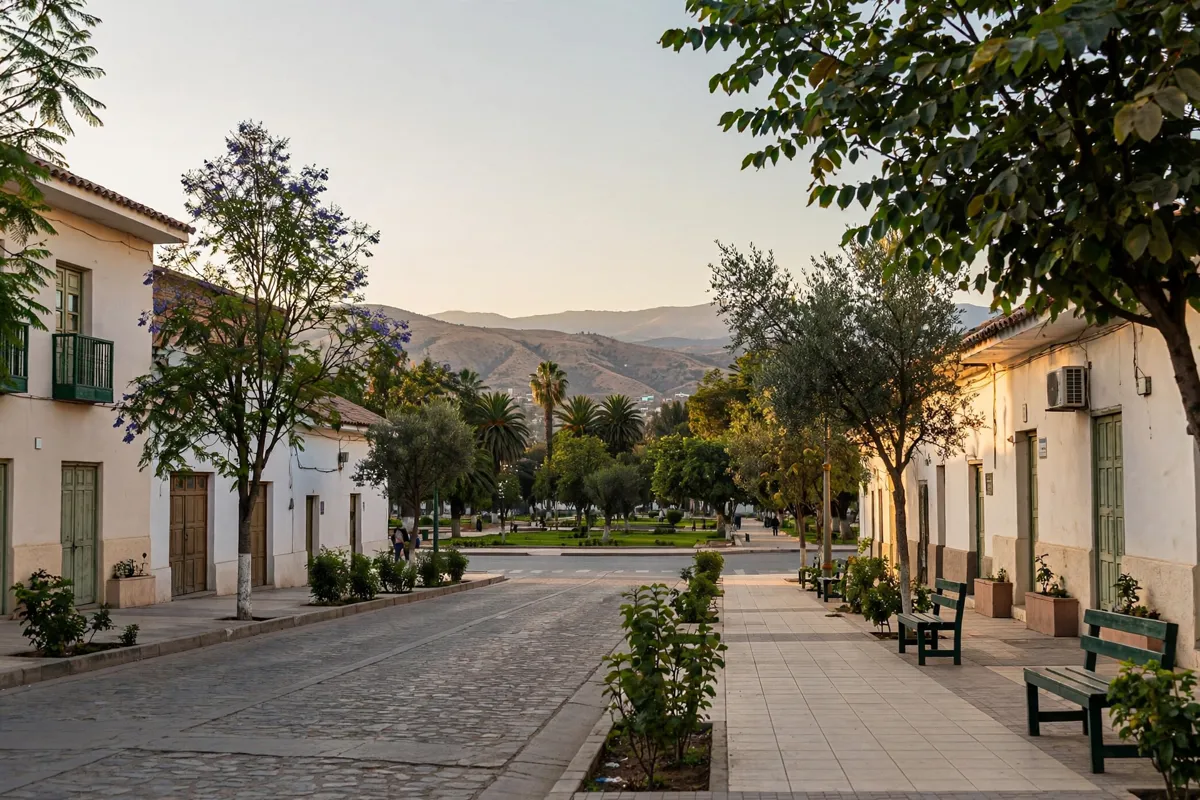
Casa Dorada’s central street-corner setting makes it easy to include as one stop while walking around Tarija. You can focus on the exterior first, then take a guided visit to see the interior galleries and preserved rooms if a listed start time suits your plans.
For another cultural stop, the Museo Franciscano “Fray Francisco Miguel Mari” is a named Tarija landmark; the central Tarija museums guide can help you plan around museum visits. If you’re arranging your arrival as well, see the guide to getting from Tarija Airport to the city.